Jewish life · Shabbat
What Shabbat is and how the community lives it
Shabbat is Judaism's weekly day of rest: from Friday at sunset until three stars appear on Saturday. Here is how we celebrate it at Beit Jasdó.
Shabbat is the heart of the Jewish week: a full day devoted to rest, prayer, and time with family and community. It is not merely a day off, but sacred time that is welcomed and bid farewell with its own rituals.
What Shabbat is
Shabbat commemorates the seventh day of creation, when—according to the Torah—the world was completed and rest was established. Each week Jewish tradition sets that day apart to disconnect from work and reconnect with what is essential.
When it begins and ends
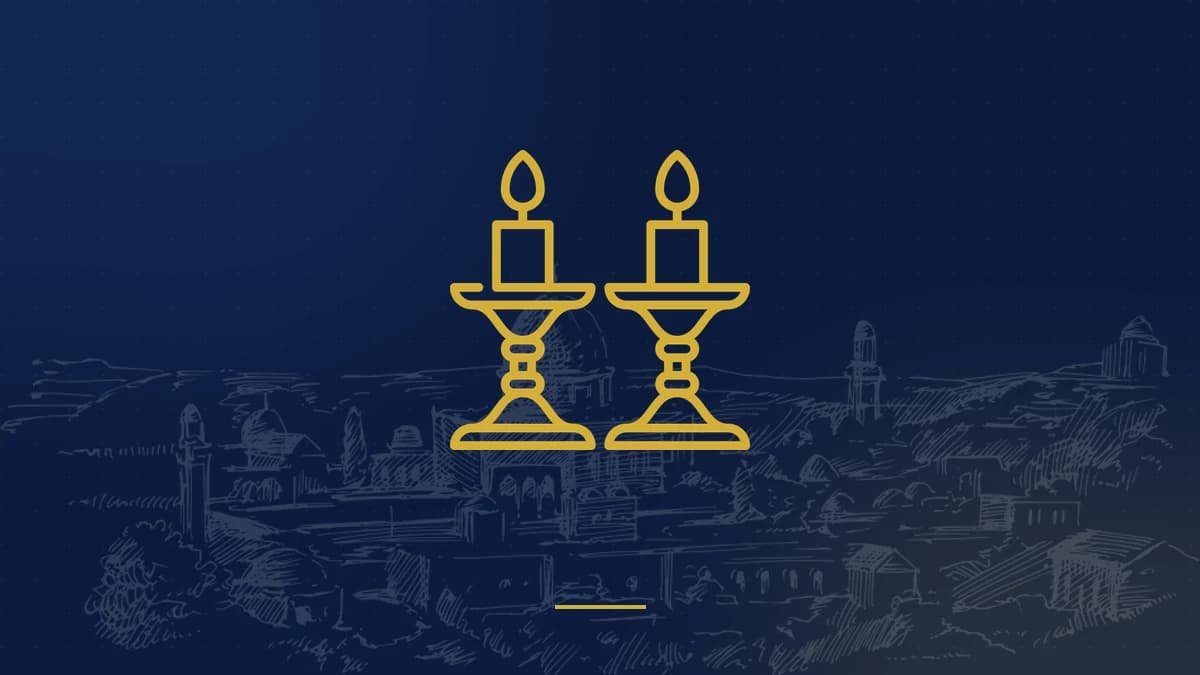
Shabbat begins on Friday, about 18 minutes before sunset, with the lighting of the candles. It ends on Saturday at nightfall, when three stars appear in the sky, with the Havdalah ceremony.
| Moment | When | What happens |
|---|---|---|
| Candle lighting | Friday, ~18 min before sunset | Shabbat is welcomed |
| Community service | Saturday 4:00 p.m. | Prayer and study together |
| Havdalah | Saturday, three stars | Shabbat is bid farewell |
The exact times change every week depending on location. On our site they are calculated automatically for Barranquilla and shown up to date in the schedule section.
How it is lived at Beit Jasdó
- The candles are lit and the blessing is recited to welcome Shabbat.
- Families share festive meals with challah (braided bread) and wine for the Kiddush.
- The community gathers to pray and study Torah.
- Work and everyday activities are set aside, to devote the day to rest and the spirit.
More than the Jewish people have kept Shabbat, Shabbat has kept the Jewish people.
How to take part
Everyone is welcome to experience Shabbat in the community, both those seeking to reconnect with their roots and those raised in the tradition. Write to us to arrange your visit and we will guide you on the times and customs.
AI answers based on this article. For practical halacha, consult a rabbi.